
Art Begins With Trust
By Gina Keatley
Art begins with trust. Not contracts, not surveillance, not constant proof — but the belief that what is offered will be met with integrity.
On a quiet roadside in Japan, that idea exists in a very practical form.
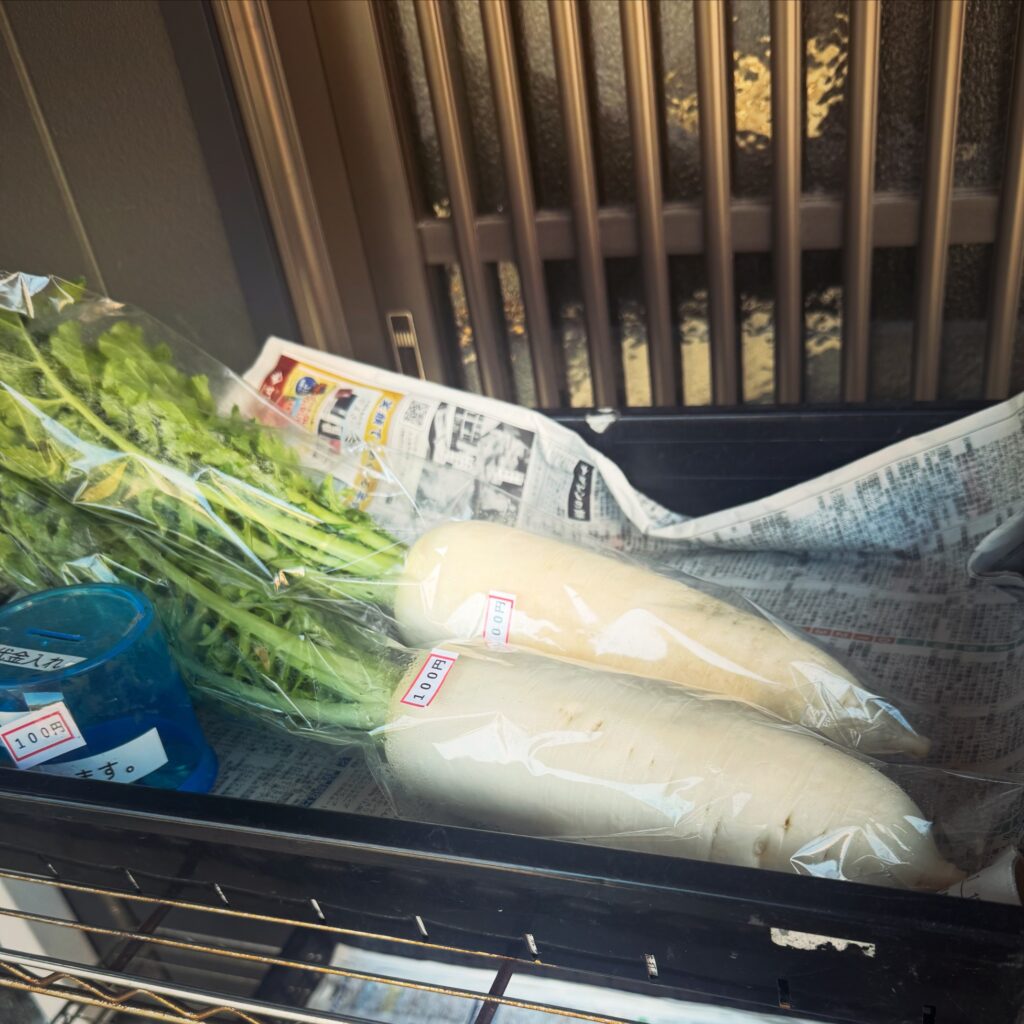
A small crate sits outside a home or along a narrow street. Inside: two daikon, a bundle of greens, neatly wrapped. A handwritten sign reads “100円.” Next to it, a simple coin box with a slit in the top. No cashier. No supervision. No receipt.
The farmer harvests early, washes the soil from the roots, packages them carefully, and leaves them there. The expectation is clear: if you take one, you pay for it. The system works because most people choose to honor it.
This is not accidental. It reflects a broader cultural value placed on mutual responsibility and social harmony. Trust is not naïveté here; it is a shared agreement. The farmer trusts the community. The community upholds that trust. The exchange becomes less about the vegetables and more about maintaining a standard of behavior.
There is something instructive about this for artists.
When a painting is hung in a gallery, the artist has already stepped back. The work stands alone. Viewers interpret it freely. Buyers decide its value. The artist cannot control the response, only the offering. That dynamic requires vulnerability and confidence at the same time.
The unmanned produce stand functions similarly. It is an open exchange without enforcement. Value is clearly stated, but honesty is assumed. The structure is simple, yet it depends entirely on invisible ethics.
Visually, the scene is understated but intentional: long white daikon against green leaves, clear wrapping catching the light, a blue coin box providing a quiet focal point. It could be read as a minimalist installation about commerce and conscience. But it is not staged. It is daily life.
In a world increasingly built around monitoring and verification, this model feels almost radical. It suggests that systems do not always require oversight to succeed. Sometimes they require belief.
Art begins with trust. So does a box of vegetables left by the road.
アートは信頼から始まる
ジーナ・キートリー 作
アートは信頼から始まる。
契約でも、監視でも、証明でもない。
差し出されたものが誠実に受け取られるという前提から始まる。
日本の静かな道端には、その考えがとても実際的な形で存在している。
小さな箱の中に、大根が二本、青々とした葉物がひと束。
「100円」と書かれた手書きの札。
横には、硬貨を入れるためのシンプルな箱。
店員はいない。見張りもいない。レシートもない。
農家は早朝に収穫し、土を洗い流し、丁寧に包み、並べる。そしてその場を離れる。
前提は明確だ。持っていくなら、代金を入れる。
仕組みが成り立つのは、多くの人がその約束を守るからだ。
これは偶然ではない。
相互責任や社会的調和を重んじる文化の表れでもある。
ここでの信頼は無防備さではなく、共有された合意だ。
農家は地域を信じ、地域はその信頼を守る。
取引は単なる野菜の売買を超え、行動の基準を維持する行為になる。
この構造は、アーティストにも通じる。
作品がギャラリーに掛けられた瞬間、作り手は一歩引く。
作品は自立し、鑑賞者は自由に解釈する。
価値を決めるのも他者だ。
作家がコントロールできるのは「差し出すこと」だけ。
そこには、脆さと覚悟の両方がある。
無人販売の野菜も同じだ。
価格は明確だが、誠実さは前提として置かれている。
構造はシンプルだが、見えない倫理によって支えられている。
長い白い大根と鮮やかな緑。
透明な包装に差し込む光。
青いコイン箱が静かな焦点となる。
それはまるで、商いと良心をテーマにしたミニマルなインスタレーションのようだ。
しかしこれは演出ではなく、日常の風景だ。
監視や確認が当たり前になった世界の中で、この仕組みは静かに問いかける。
すべてのシステムが管理を必要とするわけではない。
必要なのは、信じるという前提かもしれない。
アートは信頼から始まる。
道端の野菜もまた、同じだ。