
Smoke, Salt, and the Forty-Seven
By Gina Keatley
At the site of Ōishi Kuranosuke’s former residence in Akō, history stands very still.
Stone markers. Statues of the forty-seven rōnin. Quiet paths holding one of Japan’s most enduring stories of loyalty and discipline. The air feels measured. Intentional.
And then, just outside the shrine grounds, everything shifts.
During festival days, food stalls line the perimeter. Smoke lifts in soft spirals. Sweet soy glaze meets heat. Fat crackles. The smell arrives before the sound.
Beef skewers turn over open flame. Inside the shrine grounds, meat is not permitted. Purity matters. Ritual matters. So the cooking happens just beyond the boundary. Sacred space on one side. Fire and appetite on the other.
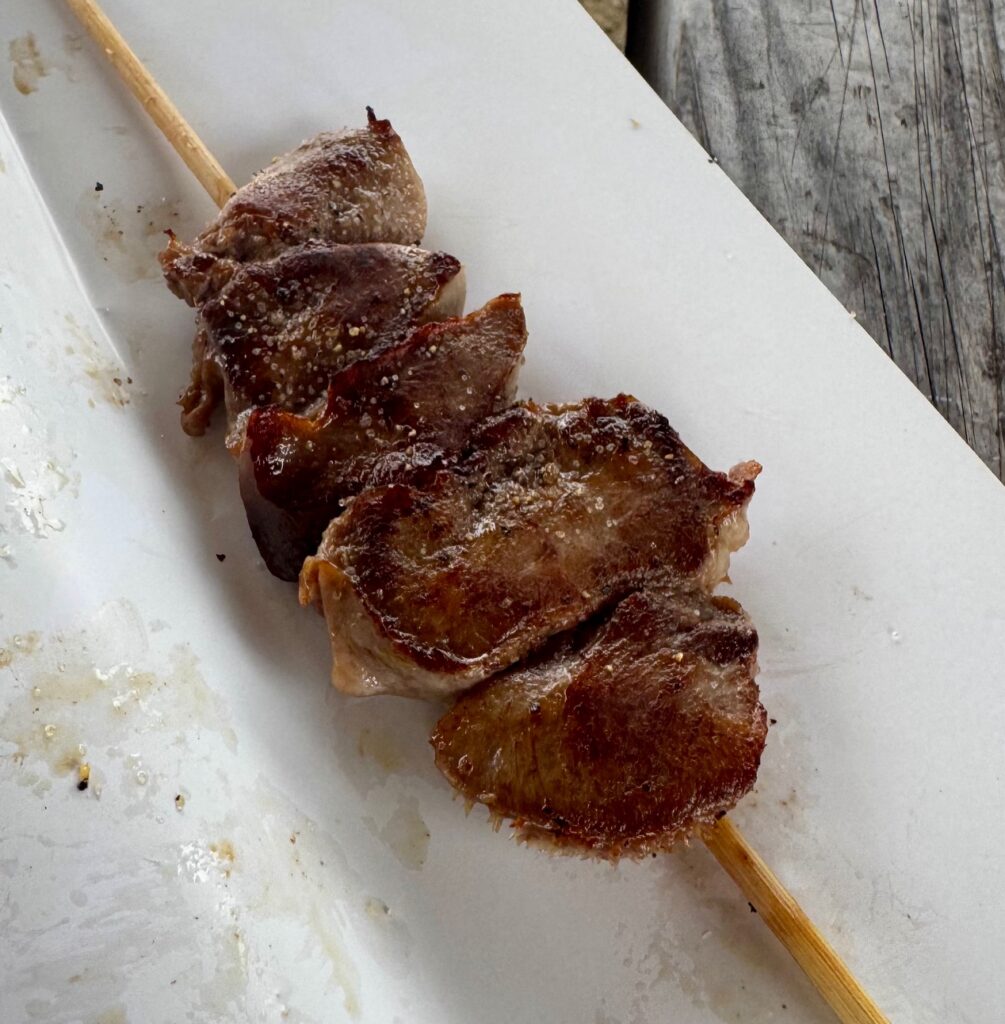
We ordered tongue.
Grilled thin, salted, edged in char. Slightly chewy. Deeply savory. The surface blistered and caramelized, the interior tender. It tasted like heat and restraint at once.
What fascinates me is the composition of it all.
The statues are sculptural. The smoke is ephemeral. The skewers are arranged in repetition, turning in rhythm over flame. Salt catches the light. Steam softens the air. Even the boundary between shrine and stall feels deliberate, like a frame separating one installation from another.
Art is not confined to a gallery here. It exists in choreography. In ritual. In contrast.
Stone and fire. Discipline and indulgence. Silence and sizzle.
Japan understands how to hold opposites without collapsing them. The sacred remains intact. The practical continues. Structure and appetite coexist.
Standing there, eating grilled tongue outside a shrine dedicated to samurai loyalty, I felt surrounded by layered composition. History carved in stone. Smoke drawing temporary lines in air. Texture everywhere.
In Akō, art is not only what is preserved.
It is also what burns, what feeds, what disappears.
And sometimes, it smells like fire.
煙と塩と四十七士
ジーナ・キートリー
赤穂の大石内蔵助旧宅跡では、歴史は動きません。
石碑。四十七士の像。忠義と規律という、日本でもっとも語り継がれる物語のひとつを抱えた静かな小径。空気は張りつめ、意図をもって整えられているように感じられます。
けれど、神社の敷地を一歩出ると、すべてが変わります。
祭りの日には、境界に沿って屋台が並びます。煙がゆっくりと立ちのぼり、甘い醤油だれが熱に触れる。脂がはぜる。匂いは、音よりも先に届きます。
牛串が直火の上で回る。境内では肉は許されていません。清浄は守られ、儀礼は保たれる。だから火は境界の外に置かれる。片側には聖域。もう片側には食欲。
私たちは牛タンを選びました。
薄く切られ、塩が振られ、縁は香ばしく焼けている。わずかに歯ごたえがあり、旨味は濃い。表面は焦げ目がつき、内側はやわらかい。抑制された熱の味がしました。
私を強く惹きつけたのは、その全体の構成です。
像は静かに立ち、煙は空気を書き換え続ける。串は反復され、炎の上でリズムを刻む。塩は光を受け、湯気が輪郭をにじませる。神社と屋台のあいだに引かれた目に見えない線さえも、ひとつの展示を区切るフレームのように感じられました。
ここでは、アートは閉じ込められていません。配置の中にあり、儀式の中にあり、対比の中に存在しています。
石と火。規律と享楽。静寂と焼ける音。
日本は、対極を崩さずに並べることを知っています。聖なるものは守られ、日常は続いていく。構造と欲求は、ぶつかることなく共存する。
忠義を祀る場所のすぐ外で牛タンを頬張りながら、私は重なり合う構成の中に立っていました。石に刻まれた歴史。空に一瞬だけ線を引く煙。あらゆる場所にある質感。
赤穂では、アートとは保存されるものだけではありません。
燃え、満たし、やがて消えていくものもまた、表現です。
そして時に、それは火の匂いがします。