
Ash and Small Things
By Gina Keatley
You smell the fire before you see it. In the early morning air, it’s unmistakable. Burnt wood, paper, straw, a hint of incense that feels familiar even if you can’t name why. It drifts through the cold softly, settling into coats and scarves. This is how the New Year starts here. Quietly. Through scent.
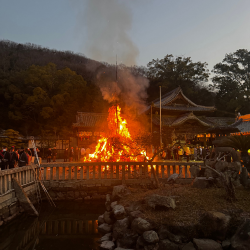
On January 14th in Akō, the morning fire at the shrine feels calm and steady. The light is pale, the sky still deciding what kind of day it wants to be. People arrive holding small things. Omamori. Paper charms. Wooden plaques. Items carried through the past year, kept close, trusted. And now, ready to be returned.
The fire is built with care. Nothing rushed. Nothing dramatic. Wood stacked neatly, flames growing at their own pace. Smoke lifts and moves gently across the shrine grounds and toward the historic neighborhood across the street. Samurai houses and old wooden homes sit comfortably in the background, as if they’ve seen this a hundred times before. Because they have.
What I love about this ritual is how physical it is.
Paper curls. Ink disappears. Twine gives way almost immediately. You can actually watch things simplify. Objects lose their shape, their job, their story. What’s left is ash. Light, quiet, unbothered. It feels honest.
As an artist, this part makes complete sense to me. We spend so much time making things. Adding layers. Building meaning. But some of the best work happens in reverse. Editing. Letting go. Allowing something to be finished instead of endlessly improved. Fire understands this instinctively.
There’s no performance here. No one overthinks it. Hands open. Items are placed into the fire gently. People don’t linger. They trust the process. That trust feels very much like art to me. The moment when you stop controlling a piece and let it become what it wants to be.
The smell shifts as the fire settles. Strong at first, then softer. Smoke thins. Ash gathers quietly at the base. Morning continues. People bow. Someone laughs. Life moves on without needing a big conclusion.
Leaving the shrine, the scent follows you. On your clothes. In your hair. A small reminder that material carries memory even after it changes form. In my work, I’m always thinking about what stays after the gesture is done. After the mark is made. After you decide to stop.
Ash isn’t the end.
It’s just what’s left when something has done its job.
And sometimes, that’s exactly enough.
灰と小さなもの
ジーナ・キートリー
火は、姿を見る前にまず匂いでやってくる。早朝の空気の中で、それはすぐにわかる。焼けた木、紙、藁、そして名前を思い出せないけれど懐かしいお香の気配。冷たい空気の中をやさしく漂い、コートやマフラーにそっと移る。ここでの新年は、音ではなく、匂いから始まる。
1月14日の朝、赤穂の神社の火は落ち着いていて、静かだ。光は淡く、空はまだその日の表情を決めかねている。人々は小さなものを手にして集まってくる。お守り、紙の札、木の絵馬。一年を共に過ごし、守られ、信じられてきたものたち。そして今、返す準備が整ったものたち。
火は丁寧につくられる。急がない。大げさにもしない。きれいに積まれた木に、炎が自分の速度で育っていく。煙は境内をゆっくりと流れ、通りの向こうにある歴史ある町並みへと向かう。武家屋敷や古い木造家屋は、何事もないようにその光を受け止めている。何度も見てきた光景だからだ。
この儀式で私がいちばん好きなのは、その身体性だ。
紙はくるりと丸まり、墨は消え、紐はあっという間に姿を失う。ものが、目の前でどんどん簡素になっていく。形も役割も物語も手放し、残るのは灰だけ。軽く、静かで、執着がない。とても正直に感じられる。
アーティストとして、この感覚はとてもよくわかる。私たちは常に何かをつくり、重ね、意味を足していく。でも、良い仕事の多くはその逆の方向にある。削ること。手放すこと。完璧にし続けるのではなく、終わらせること。火は、その判断を迷いなく行う。
ここには演出がない。考えすぎる人もいない。手を開き、ものを火に預ける。長く見守ることもしない。プロセスを信頼している。その信頼は、私にとってとても創作的だ。作品をコントロールするのをやめ、あるべき姿に委ねる瞬間と重なる。
火が落ち着くにつれて、匂いも変わる。最初は強く、やがてやわらかく。煙は薄れ、灰が静かに積もる。朝は続く。お辞儀をする人。笑う声。特別な締めくくりは必要ない。
神社を後にすると、その匂いはまだ残っている。服に、髪に。形が変わっても、素材は記憶を運ぶのだと教えてくれる。私の制作でも、いつも考えているのは、行為が終わったあとに何が残るのかということ。線を引いたあと。手を止めたあと。
灰は終わりではない。
役目を果たしたあとに残るものだ。
そして時々、それだけで十分なのだ。