
Texture, Everywhere
By Gina Keatley
In Japan, texture isn’t something you go looking for.
It’s already there.
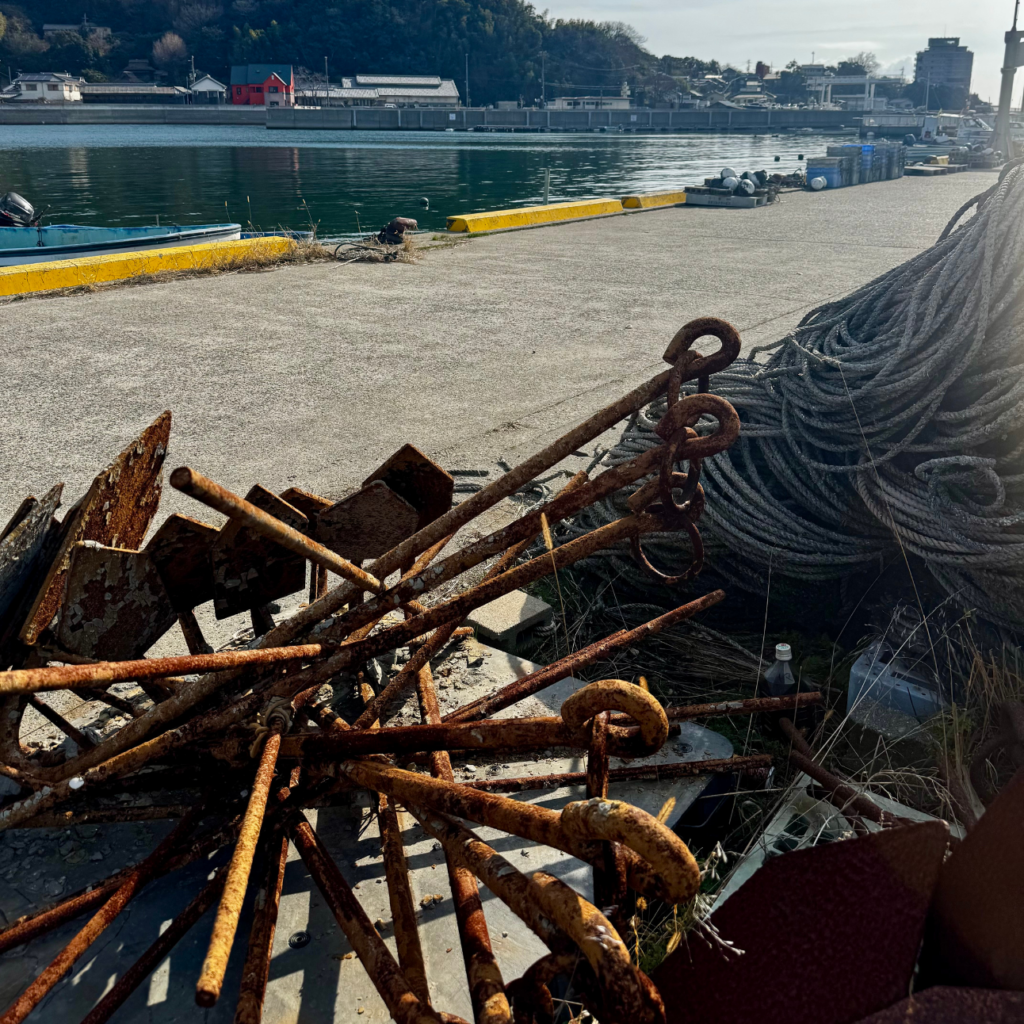
On a harbor edge in Akō, it shows up in rusted metal and thick rope left to hold their own history. Nothing cleaned up too quickly. Nothing overworked. Just surfaces doing what they do over time.
But it’s not just here.
It’s in the way wood darkens on the outside of a house.
It’s in worn stone steps that have been walked for decades.
It’s in paper, in fabric, in food—char, glaze, steam, grain.
Texture isn’t treated like an effect. It’s treated like a result.
That’s the difference.
In a lot of places, we try to create texture. We build it up, layer it on, make it louder so it reads. Here, it comes from use. From weather. From repetition. From restraint.
Even the quiet surfaces carry something.
A concrete wall isn’t just flat—it’s stained, softened, marked by time.
A rope isn’t just functional—it holds tension, memory, weight.
A piece of metal isn’t just old—it’s been changed by its environment.
Nothing is neutral.
And nothing is rushed.
There’s a patience to it. A willingness to let things age instead of constantly resetting them. That’s where the richness comes from. Not in adding more, but in allowing more to happen.
You feel it everywhere once you start noticing.
In the studio, that shifts how you think.
Texture isn’t something you force.
It’s something you allow.
It comes from letting materials interact. Letting surfaces sit. Letting time be part of the process instead of something you’re working against.
And just as important—knowing when to stop.
Because not every surface needs to speak at the same volume. The quiet ones matter just as much. They give everything else room to hold.
That’s what Japan does so well.
Texture is everywhere.
Not because it’s designed that way.
But because it’s respected.
テクスチャは、どこにでもある
ジーナ・キートリー
日本では、テクスチャは探しに行くものではない。
すでに、そこにある。
赤穂の港の端では、それが錆びた金属や、太く巻かれたロープとして現れる。急いで片付けられることもなければ、過剰に手を加えられることもない。ただ、時間の中で素材がそのまま変化している。
でも、それはここだけの話ではない。
家の外壁でゆっくりと色を深めていく木材。
何十年も踏み固められた石の階段。
紙や布、食べ物の中にもある——焦げ、艶、湯気、繊維。
テクスチャは「加えるもの」として扱われていない。
「結果」として存在している。
そこが違う。
多くの場所では、テクスチャを作ろうとする。重ねて、盛って、強調して、見せようとする。でもここでは、使われることで生まれる。天候によって、繰り返しによって、そして抑制によって。
静かな表面でさえ、何かを持っている。
コンクリートの壁はただ平らなだけではない。汚れ、柔らぎ、時間の痕跡が残る。
ロープはただの道具ではない。張力、記憶、重さを抱えている。
金属はただ古いのではない。環境によって変えられている。
何も中立ではない。
そして、何も急がない。
そこには時間を受け入れる姿勢がある。常にリセットするのではなく、変化をそのまま残していく。その積み重ねが、深さになる。
一度気づくと、それはどこにでも見えてくる。
スタジオでも、考え方が変わる。
テクスチャは無理に作るものではない。
許すものだ。
素材同士を作用させ、表面をそのままにし、時間をプロセスの一部として受け入れること。
そして同じくらい大切なのが、止めることを知ること。
すべての表面が同じ強さで語る必要はない。静かな部分があるからこそ、他が成立する。
日本はそれをよく理解している。
テクスチャは、どこにでもある。
デザインされているからではない。
尊重されているからだ。