
Oysters, Texture, and the Art of Absorbing a Place
by Gina Keatley
In Akō, oysters are not treated like luxury. They are treated like part of the environment itself.
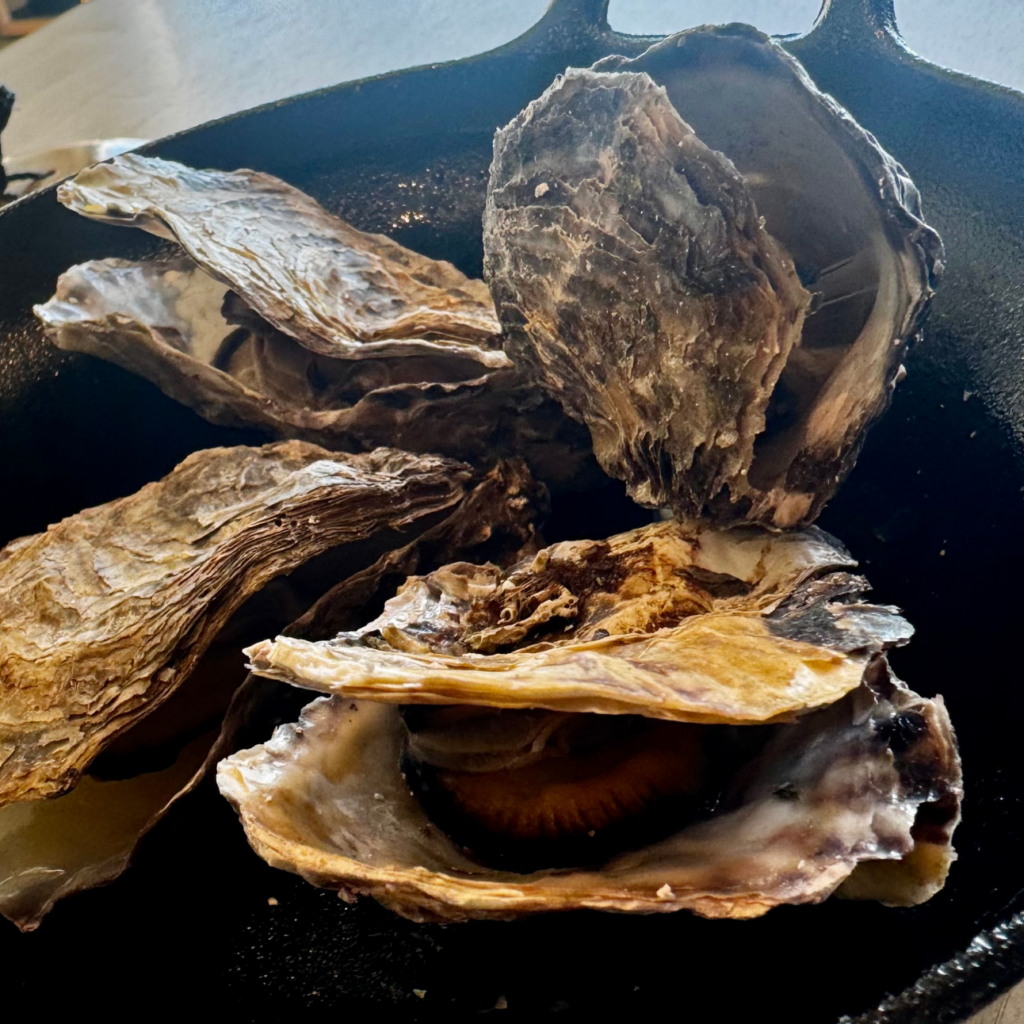
You see them everywhere — stacked shells outside small restaurants, trays arriving fresh from the Seto Inland Sea, smoke rising from grilled oysters along the coast. They belong to the visual language of the town. Quiet. Weathered. Functional. Beautiful without trying too hard.
That balance feels deeply connected to the way I think about art.
As an abstract artist, I am constantly studying surfaces. Erosion. Texture. Pressure. The way materials record time physically. Oyster shells feel almost sculptural to me — layered ridges, fractured edges, mineral buildup, soft iridescence hidden beneath rough exteriors. They look less manufactured and more accumulated, shaped slowly through environment and repetition.
Nature making abstraction on its own.
What fascinates me most is that oysters are also secretly one of the most sustainable foods in the world. They require no feed, no farmland, and very little intervention. Instead of damaging ecosystems, they actually help clean the water around them by filtering it naturally. Entire oyster beds improve marine environments simply by existing.
There is something incredibly elegant about that.
In art, I think we often chase the idea of creating impact without destruction — making work that holds presence without overwhelming everything around it. Oysters do this naturally. They grow slowly, filter quietly, strengthen ecosystems, and leave behind these incredible sculptural shells that feel almost impossible to design intentionally.
Honestly, if you placed a pile of oyster shells inside a contemporary gallery on a concrete floor beside minimalist lighting, people would study them for twenty minutes.
And maybe they should.
The shells hold everything I love visually: restraint, imperfection, texture, asymmetry, tonal variation, history. Their interiors almost glow against the roughness outside, which feels similar to the tension I often search for in my own work — dense surfaces interrupted by moments of light, softness emerging through abrasion.
Travel changes the way I see these things. In Akō, oysters stop being just food. They become material culture. Environmental design. Sculpture. Evidence of how a place interacts with water, labor, patience, and survival.
That is what inspires me most creatively while traveling through Japan. Not the obvious landmarks. The quieter systems underneath daily life. The way beauty appears through utility. The way restraint can still feel rich. The way texture carries memory.
An oyster shell does not hide the fact that it survived pressure, salt, movement, and time.
Neither should art.
場所を吸収する芸術 ― 牡蠣、質感、そして赤穂
ジーナ・キートリー
赤穂では、牡蠣は高級品として扱われていません。
それは、この土地の環境そのものの一部として存在しています。
小さな食堂の外に積み重なる殻。瀬戸内海から届いたばかりの牡蠣のトレー。海沿いに立ちのぼる焼き牡蠣の煙。牡蠣はこの街の視覚言語の一部になっています。静かで、風化していて、機能的で、そして無理をせず美しい。
その感覚は、私が芸術について考える方法と深く重なっています。
抽象画家として、私は常に“表面”を観察しています。侵食。質感。圧力。そして素材がどのように時間を物理的に記録していくのか。牡蠣の殻は、私にはほとんど彫刻のように見えます。幾重にも重なる隆起、割れた縁、鉱物の蓄積、荒々しい外側の奥に隠れた柔らかな光沢。それらは人工的に作られたというより、環境と反復によってゆっくり蓄積されたものに見えるのです。
まるで自然そのものが抽象表現を作り出しているようです。
さらに魅力的なのは、牡蠣が実は世界でも非常に持続可能な食べ物だということです。
餌もほとんど必要なく、農地も必要ありません。人間による介入も最小限です。それどころか、牡蠣は海水をろ過することで周囲の水を浄化し、生態系を改善しています。牡蠣礁そのものが、ただ存在するだけで海洋環境を支えているのです。
そこには、とても静かなエレガンスがあります。
芸術の中でも、私たちはしばしば「破壊せずに存在感を持つ」ことを追い求めています。空間を支配しすぎず、それでも確かな存在感を放つ作品。牡蠣はそれを自然に実現しています。ゆっくり成長し、静かに水を浄化し、生態系を強くしながら、信じられないほど美しい殻を残していく。
正直に言えば、もし現代アートギャラリーのコンクリートの床に牡蠣殻を積み上げ、ミニマルな照明を当てたら、人々は20分くらい真剣に見続けると思います。
そして、それは間違っていない気がします。
牡蠣の殻には、私が視覚的に愛しているものがすべて詰まっています。抑制、不完全さ、質感、非対称性、色調の揺らぎ、歴史。荒れた外側に対して、内側がほのかに光を放つ様子は、私自身の作品の中で探し続けている感覚にも似ています。重厚な表面の中に差し込む光。摩耗の中から現れる柔らかさ。
旅は、こうしたものの見え方を変えてくれます。
赤穂では、牡蠣は単なる食べ物ではなくなります。素材文化であり、環境デザインであり、彫刻であり、この土地が水、労働、忍耐、そして生存とどのように向き合ってきたかを示す証拠になります。
日本を旅しながら、私が創作の中で最も刺激を受けるのは、そうした部分です。
有名な観光地ではありません。
日常の奥に静かに存在している仕組み。
実用性の中に現れる美しさ。
抑制の中に残る豊かさ。
そして、質感が記憶を運ぶということ。
牡蠣の殻は、自分が圧力や塩、水の流れ、時間を生き抜いてきたことを隠しません。
芸術も、そうあるべきだと思うのです。