
Matcha, Simplicity, and How Japan Turned Leaves Into a Global Obsession
by Gina Keatley
It is funny when you really think about it.
Matcha — one of the most globally desired drinks right now — is essentially powdered green tea leaves.
That is it.
No impossible ingredients.
No futuristic technology.
No luxury material pulled from the bottom of the ocean.
Just leaves, carefully grown, dried, stone-ground, and prepared with extraordinary attention.
And somehow Japan transformed that simplicity into an entire global aesthetic.
You now see matcha everywhere — Brooklyn cafés, luxury hotels, skincare campaigns, fashion editorials, desserts, ceramics, wellness brands, contemporary cafés designed entirely around that exact muted shade of green. Matcha has moved beyond food and become part of visual culture itself.
That fascinates me as an artist.
Because what Japan accomplished with matcha is actually very similar to what powerful contemporary art does. It takes something minimal and elevates it through ritual, presentation, discipline, atmosphere, and design. The value is not only in the material itself, but in the emotional and visual experience built around it.
In many ways, matcha behaves almost like installation art.
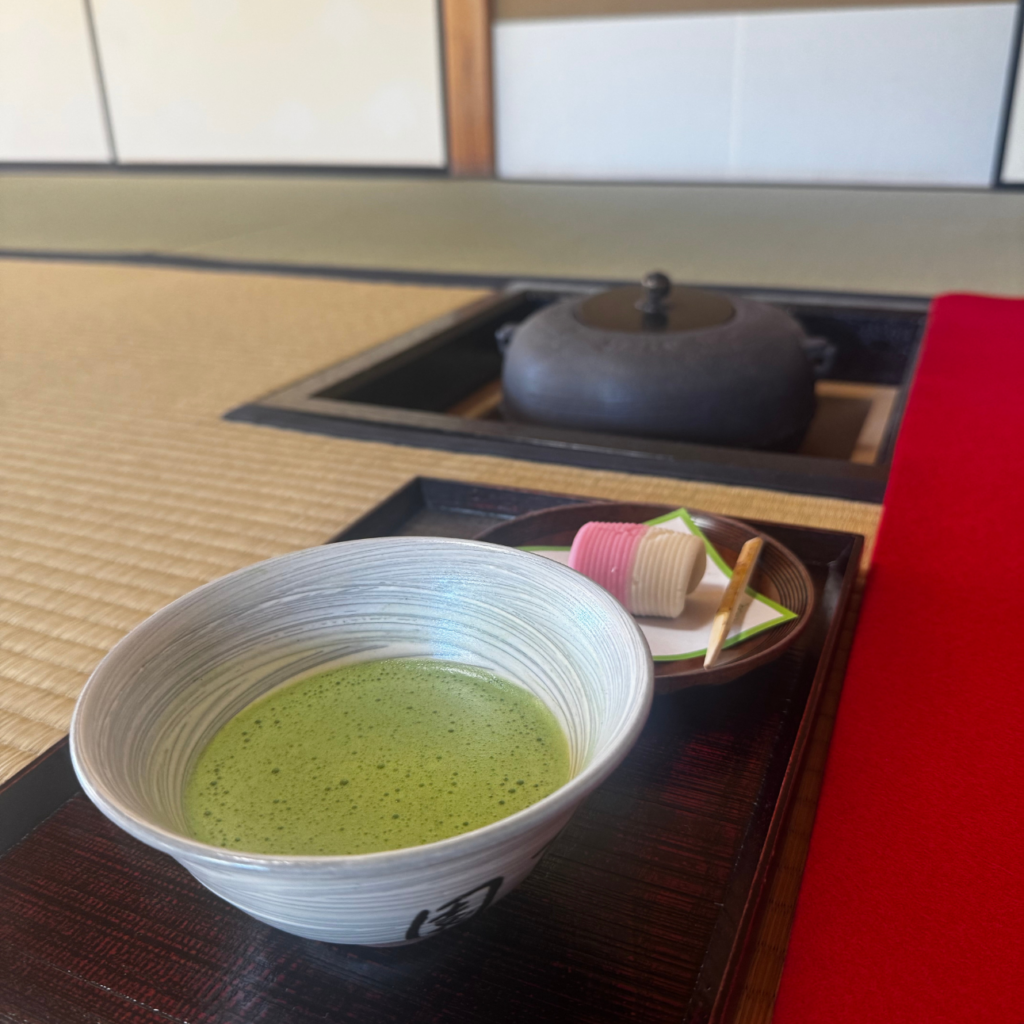
The bowl matters.
The ceramic texture matters.
The whisk matters.
The movement matters.
The negative space matters.
Even the silence becomes part of the composition.
Nothing is accidental.
That philosophy feels deeply connected to Japanese aesthetics and also to the way I think about abstraction. In contemporary art, especially minimalist and abstract work, restraint often creates more impact than excess. One gesture can carry more tension than fifty. One controlled color can dominate an entire space.
Matcha works visually in the exact same way.
The green itself feels almost curated by nature. Soft but intense. Organic but graphic. Against neutral wood, tatami, black iron kettles, or pale ceramics, the color becomes its own composition. Sitting in a traditional tea space honestly feels like stepping inside a carefully balanced color study.
Even preparing matcha feels performative in the best sense — repetition, rhythm, gesture, texture, sound. Watching tea being whisked almost reminds me of painting. The circular motion. The control. The physical relationship between hand, pressure, and material.
I think part of why matcha became so globally desired is because people are hungry for experiences that feel intentional. Modern culture pushes speed, noise, excess, constant consumption. Matcha culture offers the opposite. Precision. Slowness. Restraint. Beauty through simplicity.
Japan has always understood something many artists spend years trying to learn:
Minimal does not mean empty.
Simple does not mean insignificant.
And sometimes the most powerful experiences come from taking one ordinary thing — leaves, water, ceramic, color, texture — and treating it with enough care that it transforms into something unforgettable.
抹茶、シンプルさ、そして日本が“葉”を世界的な憧れへ変えた方法
ジーナ・キートリー
改めて考えると、少し面白いことです。
今や世界中で求められている抹茶は、基本的には「粉末状にした緑茶の葉」にすぎません。
それだけです。
特別すぎる原料でもない。
未来的なテクノロジーでもない。
海の底から採れる高級素材でもない。
ただの葉を、丁寧に育て、乾燥させ、石臼で挽き、細やかな注意を払いながら仕上げているだけ。
それなのに、日本はその“シンプルさ”を、世界的な美意識そのものへと変えてしまいました。
今では抹茶はどこにでもあります。ブルックリンのカフェ、高級ホテル、スキンケアキャンペーン、ファッション誌、デザート、陶芸作品、ウェルネスブランド、さらには“あの柔らかな緑色”を中心にデザインされた現代的なカフェまで。
抹茶は単なる食べ物を超え、視覚文化そのものになったのです。
アーティストとして、私はそこに強く惹かれます。
なぜなら、日本が抹茶に対して行ったことは、優れた現代アートが行うことと非常によく似ているからです。
ミニマルなものを、儀式性、プレゼンテーション、規律、空気感、そしてデザインによって高めていく。
価値は素材そのものだけではなく、その周囲に作られる感情的・視覚的体験の中にあります。
ある意味で、抹茶はインスタレーションアートのように機能しています。
器が重要。
陶器の質感が重要。
茶筅が重要。
所作が重要。
余白が重要。
静けささえも構成の一部になる。
何一つ偶然ではありません。
その哲学は、日本の美意識、そして私自身が抽象表現について考える方法と深く結びついています。
現代アート、特にミニマリズムや抽象作品では、“抑制”が“過剰さ”よりも強い力を持つことがあります。
たった一つの動きが、五十の動き以上の緊張感を生むことがある。
一色だけで空間全体を支配できることもある。
抹茶も、まさに同じように視覚的な力を持っています。
あの緑色そのものが、自然によってキュレーションされた色彩のように感じられるのです。柔らかいのに強い。有機的なのにグラフィック。
木材、畳、黒い鉄瓶、淡い陶器の中で、その緑はひとつの“構成”になります。
伝統的な茶室に座っていると、まるで完璧にバランスの取れた色彩研究の中に入り込んだような感覚になります。
さらに、抹茶を点てる行為そのものにも、ある種のパフォーマンス性があります。
反復。
リズム。
所作。
質感。
音。
茶筅が抹茶を混ぜる様子を見ていると、私は時々絵画制作を思い出します。
円を描く動き。
コントロール。
手と圧力と素材の物理的な関係。
抹茶がここまで世界中で求められる存在になった理由の一つは、人々が“意図を感じられる体験”に飢えているからだと思います。
現代文化は、スピード、騒音、過剰さ、絶え間ない消費を求め続けています。
その一方で、抹茶文化が提示するのは、その逆です。
精密さ。
ゆっくりした時間。
抑制。
シンプルさの中にある美しさ。
日本は、多くのアーティストが何年もかけて学ぼうとすることを、ずっと前から理解していました。
ミニマルであることは、空虚であることではない。
シンプルであることは、取るに足らないという意味ではない。
そして時に、最も力強い体験とは、ごく普通のもの――葉、水、陶器、色、質感――に丁寧な注意を注ぐことで、忘れられない存在へと変わることなのです。