
The Space Between Grains by Gina Keatley
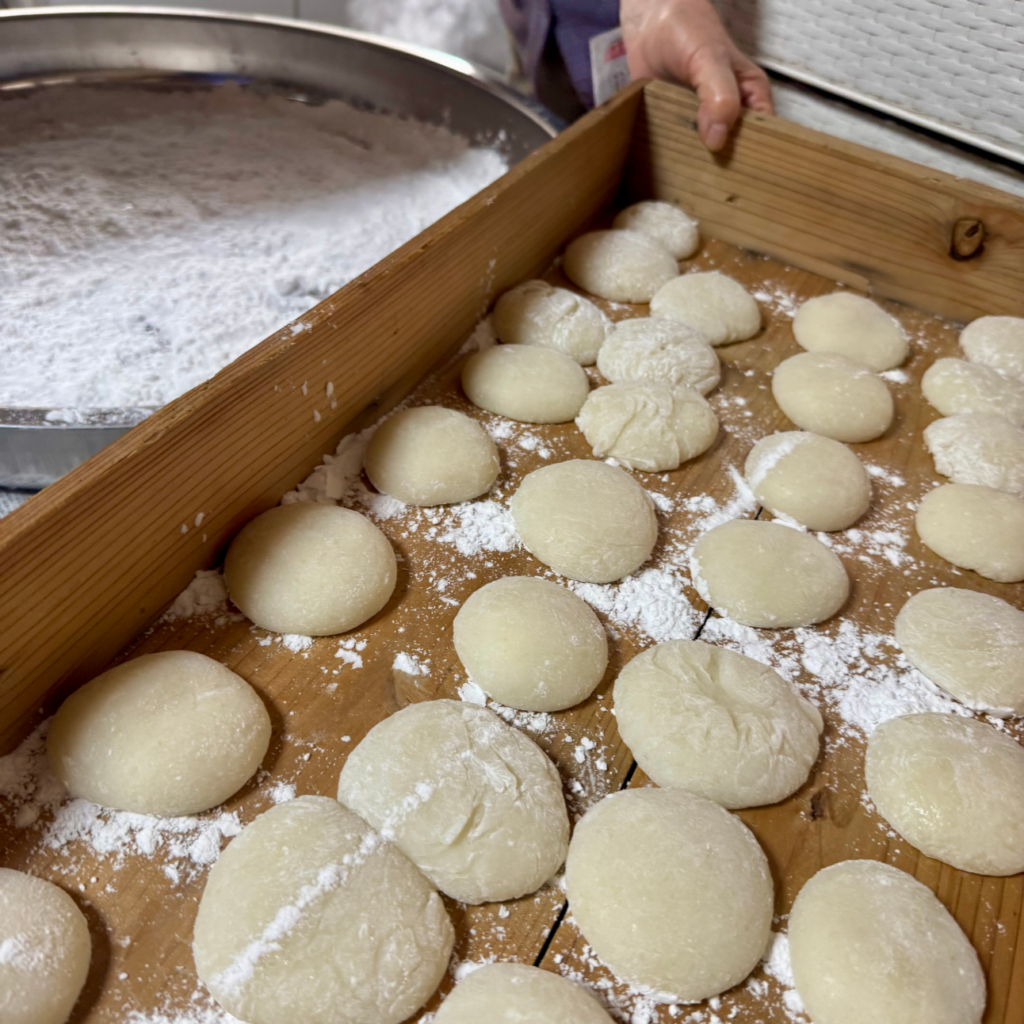
In Japan, mochi begins as rice.
Not flour. Not dough. Not a recipe waiting to be assembled.
Just rice.
Steamed, softened, and transformed through repeated impact. The process looks almost violent at first. The rice is struck again and again, folded back into itself, and struck once more. What begins as thousands of individual grains slowly loses its separateness and becomes something entirely new.
Watching mochi being made is a lesson in artistic practice.
Many artists begin by protecting every idea, every influence, every fragment of identity as if it must remain intact. But meaningful work rarely emerges from preservation alone. It comes from transformation.
The rice does not become mochi by remaining what it was.
It becomes mochi by surrendering to the process.
Art asks for the same thing.
Experiences, failures, successes, influences, criticism, travel, relationships, and time all press against us. They reshape us. At times the process can feel repetitive, even exhausting. Yet each impact creates cohesion. What once existed as separate pieces begins to form a unified whole.
The most remarkable thing about mochi is its elasticity. It stretches without breaking. It yields without losing its integrity.
Artists need the same quality.
A rigid practice can shatter under pressure. A flexible one adapts, absorbs, and continues forward. Strength is not found in resisting every force. Sometimes strength comes from learning how to stretch.
The mochi maker understands this instinctively. The goal is not simply to pound the rice. The goal is to know when enough transformation has occurred.
Too little, and the grains remain separate.
Too much, and the character is lost.
Art lives in that balance.
The lesson of mochi is simple: becoming something new requires pressure, patience, and a willingness to let go of what you were.
And perhaps the most important part is this: mochi is not found in any single grain. It emerges in the space between them, where boundaries soften, connections form, and something greater than the sum of its parts begins to take shape.
Art is often born in that same space.
Only then can the separate pieces become one.
米粒のあいだにあるもの
ジーナ・キートリー
日本では、餅は米から始まります。
小麦粉ではありません。
生地でもありません。
組み立てられるのを待つレシピでもありません。
ただの米です。
蒸され、柔らかくなり、何度も打たれることで姿を変えていきます。その工程は、最初はどこか荒々しくさえ見えます。米は繰り返し打たれ、自らの中へ折り込まれ、また打たれます。何千もの独立した粒として存在していたものが、少しずつ境界を失い、まったく新しいものへと変わっていくのです。
餅づくりを見ていると、そこには芸術制作についての教訓があります。
多くの芸術家は、自分のアイデアや影響、そしてアイデンティティの断片を、そのまま守ろうとして制作を始めます。しかし、本当に意味のある作品は、ただ保存することからは生まれません。
作品は変容から生まれます。
米は、米のままでいることで餅になるのではありません。
その過程に身を委ねることで、餅になるのです。
芸術も同じことを求めています。
経験、失敗、成功、影響、批評、旅、人との出会い、そして時間。それらは私たちに絶えず作用し、私たちを形づくっていきます。その過程は時に単調で、時に疲れるほど繰り返されるものかもしれません。
しかし、その一つひとつの作用が結びつきを生み出します。
かつて別々だったものが、やがて一つのまとまりとなっていくのです。
餅の最も素晴らしい特徴のひとつは、その伸びやかさにあります。
切れそうで切れず、形を保ちながら柔軟に変化する。
芸術家にも同じ資質が必要です。
硬直した創作は、圧力によって砕けてしまいます。
柔軟な創作は、変化を受け入れ、それを吸収しながら前へ進みます。
強さとは、すべての力に抗うことではありません。
時には、伸びることを学ぶところから生まれるのです。
餅をつく人は、そのことを本能的に理解しています。
目的は、ただ米を打つことではありません。
十分な変化が起こった瞬間を見極めることです。
足りなければ、米粒はばらばらのまま。
やり過ぎれば、本来の個性が失われてしまいます。
芸術は、その絶妙な均衡の中に存在しています。
餅が教えてくれることはシンプルです。
新しいものになるためには、圧力と忍耐、そして以前の自分を手放す勇気が必要だということです。
そして、おそらく最も大切なのはこのことです。
餅は、一粒の米の中には存在しません。
それは米粒と米粒のあいだに生まれます。
境界がやわらぎ、つながりが生まれ、それぞれの総和を超えた何かが形を持ち始める場所に。
芸術もまた、その同じ場所から生まれるのです。
そうして初めて、別々だったものは一つになることができます。